Engineering notes · Published on LinkedIn
It used to be enough to remember once a year. Now forgetting can mean an outage.
SSL/TLS certificate policy has been changing quietly but substantially. Under the CA/Browser Forum policy, the maximum validity period is being shortened in stages:
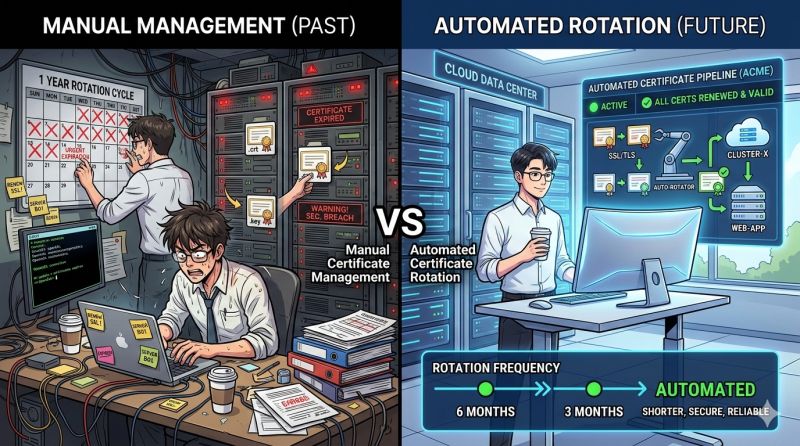
It used to be enough to remember once a year. Now forgetting can mean an outage.
SSL/TLS certificate policy has been changing quietly but substantially. Under the CA/Browser Forum policy, the maximum validity period is being shortened in stages:
From March 15, 2026: up to 200 days.
From March 15, 2027: up to 100 days.
From March 15, 2029: up to 47 days.
Around 398 days used to be the norm. The roadmap brings it down to what I described as a little over two months.
I’ve experienced the problem firsthand. A security certificate we had to renew annually once caused a service outage. The reason was simple: we missed the renewal. Afterward we put all the expiry dates on a shared calendar. At a previous company we even had a dedicated system for managing certificate expirations. Even then it struck me how difficult this was to leave to people.
We used to be able to enter an expiry date in a calendar, have the owner renew it and redeploy the server. That approach is becoming impractical. With 47-day certificates and dozens or hundreds of services, manual management breaks down quickly.
To me the policy effectively says, “Automate certificates too.” ACME-based renewal, certificate monitoring and automated deployment pipelines are becoming basic infrastructure rather than advanced DevOps options. One security policy is changing the way organizations operate. Something we did for security is becoming something that can only be sustained through operational automation.
Still tracking certificate expirations on a calendar? Soon it might be the busiest schedule you have.
References:
https://lnkd.in/g33FA5g9
https://lnkd.in/gUaDY6eH
#DevOps #SecurityEngineering #PlatformEngineering
All essays